Description
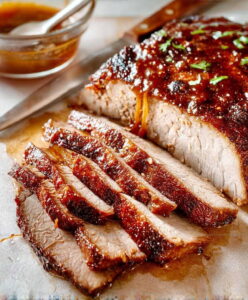
Barbecue beef brisket becomes your weekend warrior when you master this classic Texas-style slow-cooked masterpiece. Your guests will crave each smoky, tender slice of meat that falls apart with pure backyard barbecue magic.
Ingredients
Scale
Main Proteins:
- 1 whole beef brisket (12–14 pounds), point and flat
Spice Blend:
- ½ cup coarse kosher salt
- ¼ cup freshly ground black pepper
- 2 tablespoons granulated garlic
- 2 tablespoons onion powder
- 1 tablespoon smoked paprika
- 1 tablespoon chili powder
- 1 teaspoon cayenne pepper
- 1 teaspoon ground cumin
Liquids and Supporting Ingredients:
- ¼ cup yellow mustard
- 1 cup apple cider vinegar
- ½ cup water
- ¼ cup Worcestershire sauce
- 2 tablespoons brown sugar
- 1 tablespoon chili powder
- 1 teaspoon black pepper
- ½ cup beef tallow or melted butter
Instructions
- Slice away excess fat from the brisket, maintaining a ¼-inch fat cap. Remove any hard fat pockets using a sharp knife.
- Slather the entire brisket surface with ¼ cup yellow mustard, creating a sticky base for the rub.
- Blend ½ cup kosher salt, ¼ cup black pepper, 2 tablespoons granulated garlic, 2 tablespoons onion powder, 1 tablespoon smoked paprika, 1 tablespoon chili powder, 1 teaspoon cayenne, and 1 teaspoon cumin in a mixing bowl.
- Generously massage the entire spice mixture into the mustard-coated brisket, pressing firmly to help it adhere.
- Enclose the seasoned brisket in plastic wrap and refrigerate for a minimum of 2 hours, preferably overnight.
- Select hickory, oak, pecan, or mesquite wood chips for smoking.
- Configure your smoker for indirect heat cooking.
- Heat the smoker to a consistent 225-250°F (107-121°C).
- Remove the brisket from refrigeration and unwrap. Position it in the smoker with the fat cap facing upward.
- Insert a meat thermometer into the thickest part of the flat. Maintain smoker temperature between 225-250°F.
- After 3-4 hours of smoking, begin applying mop sauce every hour using a basting brush.
- Expect the internal temperature to stall around 150-170°F (66-77°C) for several hours.
- When the brisket reaches 160-170°F and develops a robust bark, prepare to wrap.
- Lay out heavy-duty aluminum foil or butcher paper. Drizzle ½ cup beef tallow or melted butter onto the surface. Center the brisket fat-side up and wrap tightly to create a sealed package.
- Return the wrapped brisket to the smoker, seam-side up. Cook until the internal temperature hits 203-205°F (95-96°C), ensuring it feels tender when probed.
- Once probe-tender, remove the brisket from the smoker. Keep it wrapped and place inside a cooler or insulated container. Rest for 2-6 hours.
- Carefully unwrap the brisket, preserving any accumulated cooking juices.
- Locate the fat seam between the point and flat. Gently separate the two muscle sections.
- Slice the flat against the grain into ¼-inch thick pieces.
- Cut the point into 1-inch cubes. Toss with barbecue sauce and return to the smoker for 1-2 hours to caramelize, or slice like the flat.
- Plate the brisket alongside your favorite barbecue accompaniments.
Notes
- Take your time with trimming the fat, as this helps create a perfect bark and allows smoke to penetrate the meat evenly.
- A mustard binder helps the dry rub stick to the brisket and adds a subtle tangy flavor that enhances the overall taste.
- The long resting period after smoking allows the meat’s juices to redistribute, ensuring each slice is tender and moist.
- For those avoiding beef, consider using a similar smoking technique with turkey or pork shoulder, adjusting cooking times and temperatures accordingly.
- Prep Time: 2 hours
- Cook Time: 12-16 hours
- Category: Beef
- Method: Smoking
- Cuisine: American
Nutrition
- Serving Size: 12
- Calories: 365
- Sugar: 2 g
- Sodium: 1200 mg
- Fat: 28 g
- Saturated Fat: 11 g
- Unsaturated Fat: 15 g
- Trans Fat: 0.5 g
- Carbohydrates: 3 g
- Fiber: 1 g
- Protein: 25 g
- Cholesterol: 95 mg